Reading is the one subject where falling behind compounds. A child who has not become a fluent reader by third grade struggles in science, in social studies, and eventually in math word problems, because every other subject assumes reading is handled.
That is why literacy carries the weight it does in Wellspring Global Academy's K-5 program. This page explains how our online reading program for elementary students works: what standards define the coursework, how instruction is delivered across live and independent time, what changes between the primary and upper elementary grades, and what happens when a child needs more support than the standard sequence provides.
Literacy Sits at the Center of the K-5 Program
Language Arts is one of the core subject areas in our K-5 elementary program, alongside mathematics, science, social studies, and special subjects including art, music, physical education, and technology. Its stated purpose is building strong readers, writers, and communicators. Two structural features of the elementary program matter more for reading than for any other subject:
- Flexible pacing. Students master foundational concepts before moving on. In reading, this is the difference between a child who genuinely decodes and one who has been moved along on a group timeline.
- Multisensory instruction. Lessons are interactive and multisensory rather than rote, which matters for early decoding work that relies on sound, sight, and physical manipulation together.
The Standards That Define Grade-Level Reading
Our K-12 curriculum is aligned to the Texas Essential Knowledge and Skills, the standards framework developed by the Texas Education Agency. For literacy, the English Language Arts and Reading standards define what students should know and be able to do at each grade level, in sequence, from kindergarten forward.
This is worth verifying rather than taking on faith. Families can review the elementary standards directly through the Texas Education Agency and see exactly what a first grader or a fourth grader is expected to master. TEKS alignment holds Wellspring students to public school academic benchmarks, with coursework designed for rigor, clear sequence, and transferability.
Accreditation adds a second layer of verification. As of June 2026, Wellspring is fully accredited through Cognia, granted through the Innovative Network of Knowledge, the nonprofit that operates Wellspring. Cognia evaluates schools against rigorous, independently reviewed standards for teaching quality, leadership, and continuous improvement, so our curriculum quality has been reviewed by an outside body rather than asserted in marketing copy. Detail is on our Accreditation page.
How Reading Instruction Actually Happens
Wellspring combines scheduled live sessions with self-paced independent work. Reading instruction uses both, and the division of labor between them is the clearest way to see how virtual literacy development in K-5 works day to day.
Live Sessions With a Certified Teacher
Elementary students typically participate in two to four live sessions daily depending on grade level, taught by certified teachers trained specifically in virtual instruction. Live time is where a teacher hears a child read, catches a hesitation, models fluency, and asks the follow-up question that reveals whether comprehension is real or surface-level. Software cannot substitute for that, which is why live instruction stays central to the model.
Recordings are available for any session a student cannot attend, so a missed morning does not become a missed lesson.
Independent Practice and Application
The rest of the day is spent on independent coursework, projects, and collaborative activities, completed on your family's own schedule within weekly progress expectations. In literacy, independent time is where practice volume accumulates: reading, writing, vocabulary work, and applying what the live session introduced.
Offline Reading Built Into the Model
Wellspring deliberately balances screen time with offline reading, movement, and hands-on activities. For literacy, this is a design choice rather than a concession. Children become readers by reading actual books with an adult nearby, and our elementary model builds that into the day rather than treating it as optional homework.
What Changes Between the Grade Bands
Reading instruction is not one continuous activity from kindergarten through fifth grade. The work shifts meaningfully, and so does the family's role.
Kindergarten Through Second Grade
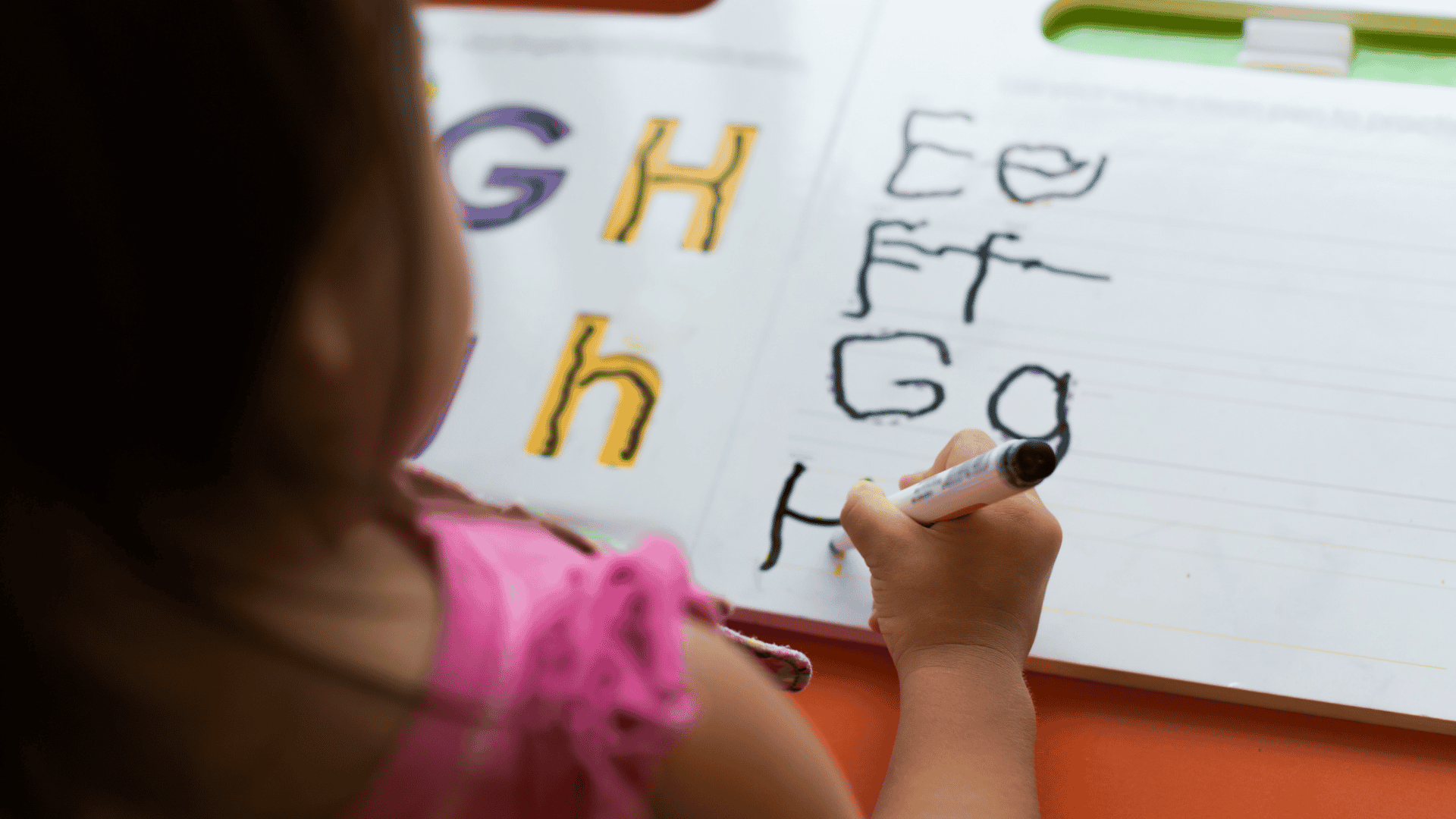
These are the code-breaking years. The TEKS sequence at this level builds print concepts, phonological awareness, phonics and decoding, and early fluency, moving toward independent reading of connected text. Instruction leans on multisensory work: sounds, letter tiles, reading aloud, and repetition.
Parent involvement is highest here. Wellspring uses a Learning Coach model, and families in grades K-2 typically spend three to four hours per day actively supporting their child. A meaningful portion of that is literacy: reading aloud together, listening to your child read, and practicing sounds. We state it plainly so families can plan around it.
Grades Three Through Five
Around third grade, the demand changes from reading words to reading for meaning. The standards shift toward comprehension of longer and more complex texts, vocabulary growth, inference, and written composition in response to reading. Students begin using reading as a tool for the rest of their coursework.
Parent involvement drops to one to two hours of oversight in grades 3-5 as students build confidence and self-management skills. Reading becomes something your child does independently while you monitor. By fifth grade, students are prepared for our middle school program, where English Language Arts moves into literature analysis, persuasive writing, and communication skills with subject-specific teachers.
When a Child Needs More Than the Standard Sequence
This is the section most families researching elementary reading support online actually came for. Here is the layered support available, in the order it typically gets used:
- Placement assessment. We assess readiness through previous academic records rather than an entrance exam. When helpful, we may recommend a placement assessment in a specific subject so your child starts at the right level. It informs the learning plan rather than determining eligibility.
- Flexible pacing. Before any formal intervention, pacing is the first tool. A child can spend extra weeks on a decoding skill without being marked behind.
- Teacher office hours. Direct access to your child's teacher outside scheduled sessions.
- One-on-one sessions. Individual work on the specific skill that is not yet secure.
- Small group tutorials. Targeted instruction with a few students working on the same skill.
- Supplemental resources. Additional materials matched to the gap.
- Documented accommodations. For students with an IEP, 504 plan, or other documented needs, we review existing documentation and implement appropriate accommodations.
Your Educational Concierge coordinates the right combination and keeps communication flowing between you, your student, and their teachers, so no one falls behind without a plan in place. That coordination is the part families tend to underestimate. Knowing a child needs help is easy. Getting the right support scheduled and following through is where most schools lose children, and it is the specific problem the Concierge model exists to solve.
Writing Grows Alongside Reading
Literacy at Wellspring is not reading with writing bolted on. Hands-on, project-based learning ties subjects together, and students research, create, and present their work from the earliest grades. That sequence is a writing curriculum in practice: gathering information, organizing it, producing something, and communicating it to an audience. For a second grader, that might mean a few sentences and a drawing presented to classmates. For a fifth grader it means something considerably more substantial. Either way, the child is writing for a real purpose rather than filling in a worksheet.
Tuition, Financial Aid, and ESA Funding
Several forms of assistance are available:
- Need-based financial aid for families who demonstrate financial need
- Merit scholarships for qualifying students
- A sibling discount for families enrolling more than one student
- A military and first responder discount
Families typically receive the most beneficial single discount or aid package rather than combining programs. Wellspring is also an approved provider for Education Savings Account programs in Arizona, Arkansas, Louisiana, Texas, West Virginia, and New Hampshire, where ESA funding may cover a significant portion of tuition. State-by-state detail is on our ESA Funding page.
For current rates by grade level and payment plan options, visit our Tuition and Financial Aid page.
See the Program Before You Enroll
We host free Virtual Open House events on the first and third Thursday of every month, with no obligation. You can see the platform, meet the team, and hear from current families, and registrants who cannot attend live receive the recording. You can also request a platform demonstration tailored to your child's grade level, the fastest way to see how reading coursework is actually presented.
View upcoming Open House events
Frequently Asked Questions
Can a child really learn to read in an online school?
Early reading requires a knowledgeable adult and consistent practice. Our model supplies both: certified teachers in daily live sessions, and a Learning Coach at home for three to four hours a day in grades K-2. Instruction is not left to software.
What if my child is reading below grade level?
Start with your admissions specialist, who may recommend a placement assessment in reading. Once enrolled, flexible pacing plus office hours, one-on-one sessions, small group tutorials, and supplemental resources are coordinated by your Educational Concierge.
Does my child read actual books, or only on a screen?
Both. Offline reading is deliberately built into the elementary model alongside digital instruction, and it is part of how we balance screen time for young learners.
Will reading credits and records transfer if we move?
Cognia accreditation strengthens credit recognition, though receiving institutions make their own decisions. Our team provides complete transcripts and supporting documentation. More detail is on our Admissions FAQ.
How much reading time should we plan for daily?
Elementary students generally spend three to five hours daily on all schoolwork combined, with kindergarten and first grade at the lower end. Your Educational Concierge helps build a daily schedule that allocates the time appropriately.
Give Your Child a Reader's Foundation
Literacy is the skill that determines how the rest of school goes. Wellspring offers standards-based reading instruction from certified teachers, verified through accreditation, paced to your individual child, with layered support when something is not clicking. Our admissions team is happy to walk you through the literacy program specifically, discuss tuition and financial aid, and help you decide whether it is the right fit. Enroll now or request information