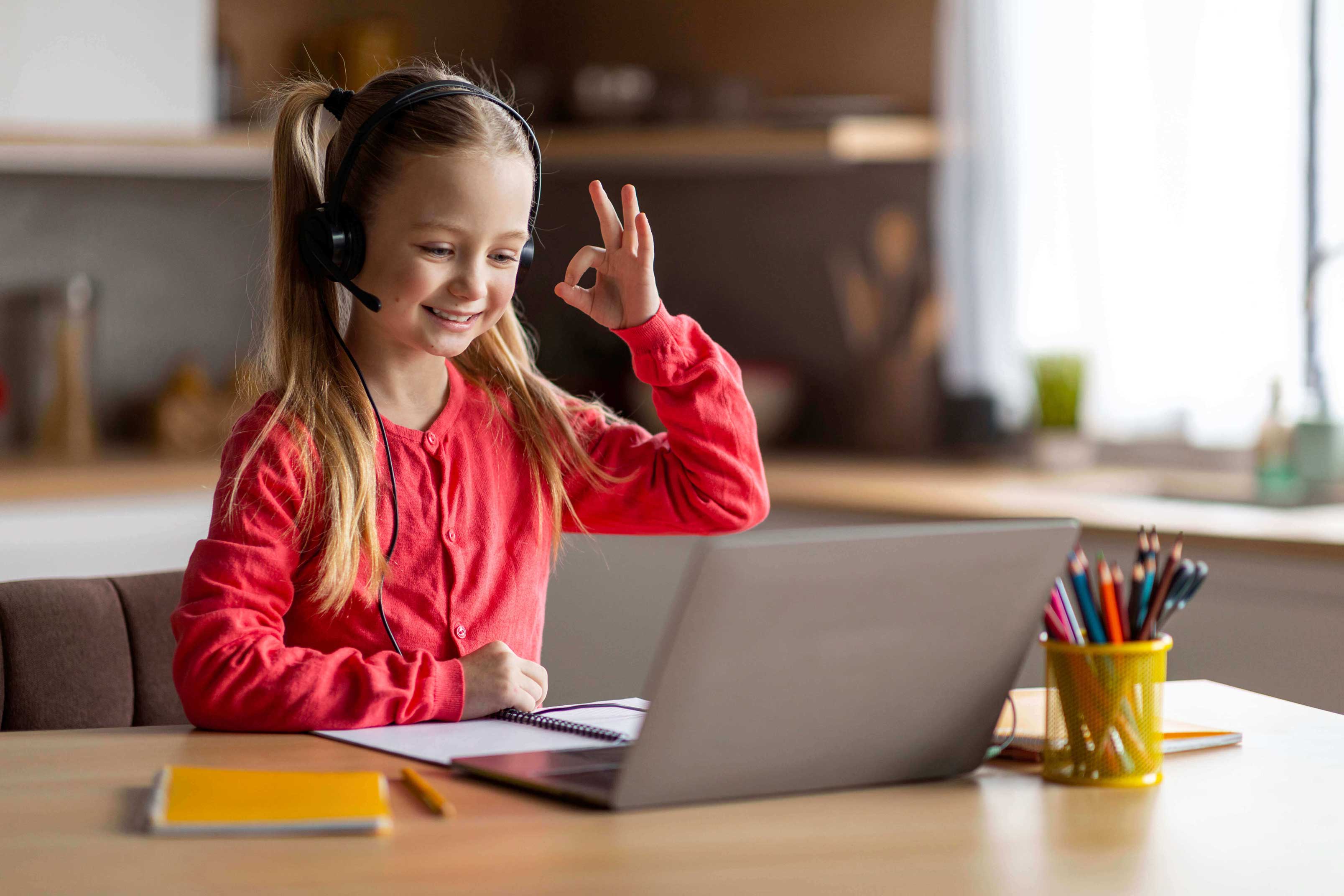
At Wellspring Global Academy, we believe that elementary education forms the foundation for lifelong learning. Our innovative K-5 program combines the best of traditional elementary education with the flexibility and personalization that online learning provides. We've reimagined what's possible in early education, creating a dynamic virtual environment where young learners develop strong academic foundations while nurturing their natural curiosity and love of learning.
Where Young Minds Blossom in a Virtual Environment
Our approach is designed with young learners in mind—balancing engaging live instruction, interactive learning activities, hands-on projects, and age-appropriate independence. With personalized support from dedicated teachers and our unique Educational Concierge service, we ensure that every child receives the attention, guidance, and opportunities they need to thrive.
The Wellspring Elementary Experience
Our elementary program creates a vibrant, supportive learning community where young students are known, valued, and engaged. We've thoughtfully designed an experience that considers the developmental needs of K-5 students while leveraging the advantages of a virtual learning environment.
Balanced Learning Approach
We combine several key elements to create a comprehensive learning experience:
- Live Interactive Sessions: Regular face-to-face time with teachers and classmates through video conferencing
- Guided Independent Learning: Structured activities students complete at their own pace with appropriate support
- Hands-on Projects: Real-world applications that bring learning to life beyond the screen
- Small Group Instruction: Targeted teaching in areas like reading and math to address specific needs
- Community Building: Intentional activities that foster connections and relationships
Educational Concierge Support
Every Wellspring family is paired with an Educational Concierge—your dedicated guide throughout your child's learning journey. For elementary families, this support is especially valuable, providing:
- Personalized onboarding to ensure a smooth transition to online learning
- Regular check-ins to monitor progress and address any concerns
- Coordination between teachers, specialists, and families
- Guidance for parents in supporting their young learners
- Resources and strategies tailored to your child's specific needs
The Parent Partnership
Parents of elementary students serve as Learning Coaches, providing the in-person support young children need while developing independence. Our program is designed to make this role manageable and rewarding:
- Clear daily schedules and learning plans
- User-friendly platforms and resources
- Regular communication with teachers
- Parent training and support resources
- Gradually increasing student independence across grade levels
Core Curriculum Areas
Our elementary curriculum aligns with rigorous academic standards while fostering creativity and critical thinking. Young learners engage with core subjects through interactive, multisensory approaches that make learning come alive.
Language Arts: Building Strong Readers and Writers
Our comprehensive literacy program develops skilled, enthusiastic readers and writers through:
- Systematic phonics instruction for strong decoding skills
- Regular guided reading in small groups based on reading level
- Diverse, engaging literature and informational texts
- Writing across multiple genres with personalized feedback
- Vocabulary development through explicit instruction and meaningful context
- Speaking and listening skills through collaborative activities
Mathematics: Developing Number Sense and Problem-Solving
Our math program builds conceptual understanding alongside procedural fluency:
- Concrete-pictorial-abstract approach to concept development
- Interactive tools and virtual manipulatives
- Real-world problem-solving applications
- Mathematical discourse and explanation of thinking
- Personalized pacing to ensure mastery before advancement
- Fact fluency practice that makes skill development engaging
Science: Hands-on Discovery and Exploration
Young scientists develop inquiry skills and conceptual understanding through:
- Virtual and hands-on experiments with household materials
- Observation and documentation of natural phenomena
- Integration of science and literacy through research projects
- Exploration of life, physical, and earth sciences
- Engineering challenges that apply scientific principles
- Digital simulations and interactive models
Social Studies: Understanding Communities and Cultures
Students develop global awareness and civic understanding through:
- Exploration of communities from local to global
- Virtual field trips to historical and cultural sites
- Primary source analysis appropriate for young learners
- Civic engagement and community service projects
- Diverse cultural perspectives and celebrations
- Geography skills using interactive maps and tools
Special Subjects: Developing the Whole Child
Our program includes enrichment areas essential to well-rounded development:
- Art: Creative expression through various media and artist studies
- Music: Appreciation, basic theory, and performance opportunities
- Physical Education: Movement activities, fitness challenges, and health education
- Technology: Digital literacy and responsible technology use
- Character Education: Social-emotional learning and values development
Project-Based Learning for Young Explorers
Elementary students thrive with our hands-on, Project-Based Learning approach. Rather than simply completing worksheets, our students embark on exciting projects that connect learning to real-world applications.
Age-Appropriate Projects That Inspire
Projects are tailored to each grade level while maintaining high engagement:
- Kindergarten-1st Grade: Short, guided projects with clear steps and immediate outcomes
- 2nd-3rd Grade: Multi-day explorations with increasing student input and choice
- 4th-5th Grade: Extended projects with substantial research and presentation components
Examples of Elementary PBL Experiences
Our projects integrate multiple subject areas while addressing authentic questions or challenges:
- Designing a habitat for a chosen animal based on research about its needs
- Creating a community improvement plan after identifying a local issue
- Developing a digital storybook that incorporates original artwork and narration
- Building and testing simple machines to solve everyday problems
- Planning and conducting a virtual marketplace with student-created products
Benefits Beyond Academic Content
Through Project-Based Learning, elementary students develop essential skills for future success:
- Curiosity and questioning
- Research and information gathering
- Planning and organization
- Creative problem-solving
- Collaboration and communication
- Presentation and reflection
Personalized Learning Journey
We recognize that every child develops at their own pace. Our program provides personalized learning paths that address each student's unique strengths, challenges, and interests.
Meeting Each Child Where They Are
Our approach to personalization includes:
- Initial and ongoing assessments to identify learning needs
- Customized pacing that ensures mastery before advancement
- Targeted small group instruction based on specific skills
- Alternative approaches for different learning styles
- Choice and voice in demonstrating understanding
- Regular progress monitoring and plan adjustments
Support for Diverse Learners
We're committed to serving all types of learners:
- Intervention support for students needing additional help
- Enrichment opportunities for advanced learners
- Accommodations for various learning differences
- English language development support
- Executive functioning and study skills development
Building Digital Literacy and Independence
In today's world, digital skills are essential. Our elementary program thoughtfully introduces technology as a tool for learning, helping students develop healthy digital habits and skills from an early age.
Age-Appropriate Technology Introduction
We carefully scaffold technology use across grade levels:
- K-1st Grade: Simplified navigation, audio support, and parent partnership
- 2nd-3rd Grade: Increasing independent navigation and basic digital creation
- 4th-5th Grade: Research skills, digital citizenship, and collaborative tools
Developing Healthy Digital Habits
We emphasize responsible technology use through:
- Clear screen time boundaries within our program
- Balance between digital and hands-on learning activities
- Explicit instruction in digital citizenship
- Cybersecurity and online safety education
- Ergonomic practices and physical activity breaks
Social Connection and Community
Virtual learning doesn't mean learning in isolation. Our elementary students connect with peers through interactive live sessions, collaborative projects, and virtual clubs.
Building Classroom Community
Our teachers create strong classroom communities through:
- Daily morning meetings and closing circles
- Collaborative learning activities in breakout rooms
- Shared celebrations and special events
- Class jobs and leadership opportunities
- Consistent community-building routines
Beyond the Classroom Connections
Students engage with the broader school community through:
- Cross-grade buddy programs
- Virtual clubs based on shared interests
- School-wide assemblies and events
- Regional in-person meetups when possible
- Community service projects and partnerships
A Day in the Life of a Wellspring Elementary Student
While each student's schedule is personalized to their needs, here's a glimpse into what a typical day might look like for a Wellspring elementary student:
Morning
- Start the day with a virtual morning meeting to build community
- Engage in live language arts instruction with the teacher and classmates
- Practice reading skills in a small guided reading group based on level
- Take a movement break with suggested physical activities
- Complete independent reading and writing activities at their own pace
Mid-day
- Join a live mathematics lesson with interactive digital manipulatives
- Work on personalized math practice with immediate feedback
- Take a substantial break for lunch and physical activity
- Participate in a science or social studies live session
Afternoon
- Work on current project-based learning activities
- Engage in specials (art, music, PE) through both live and independent activities
- Meet with the teacher for individual check-in or small group work
- Complete any remaining independent learning activities
- End the day with reflection and preview of tomorrow
This balanced schedule typically involves 3-5 hours of learning activities, depending on grade level, with approximately half that time in live sessions and the remainder in independent work, projects, and offline activities.
Parent Partnership
Parents play a vital role in supporting young learners in a virtual environment. At Wellspring, we provide comprehensive resources and support to make this partnership successful.
The Learning Coach Role
As a Learning Coach, parents provide:
- Appropriate supervision based on age and independence level
- Assistance with technology and materials
- Encouragement and motivation
- Communication with teachers about progress or concerns
- Support in developing executive functioning skills
The time commitment gradually decreases as students develop independence:
- K-1st Grade: 3-4 hours of active support daily
- 2nd-3rd Grade: 2-3 hours of support with increasing independence
- 4th-5th Grade: 1-2 hours of oversight with greater autonomy
Support and Resources for Parents
We equip parents with everything they need to support their child's success:
- Comprehensive orientation program
- Detailed guides and tutorials
- Regular parent education webinars
- Learning Coach community for peer support
- Direct access to the Educational Concierge team
Frequently Asked Questions
How do you teach reading and math in a virtual setting?
Our reading and math instruction combines live teacher-led lessons, interactive digital activities, and hands-on practice. We provide guidance for hands-on materials for math concepts and physical materials for reading and writing development. Teachers use engaging digital tools to model skills and monitor progress. Small group instruction allows for targeted teaching based on each student's needs.
How much screen time will my elementary student have each day?
We're mindful of age-appropriate screen time. Our program balances live online sessions with plenty of offline activities, hands-on projects, physical movement, and reading time. Typically, elementary students spend 1.5-3 hours in live sessions daily (depending on grade level), with additional time for independent digital activities. We encourage regular breaks and provide suggestions for physical activity throughout the day.
How do you make learning engaging for young students?
We bring learning to life through interactive lessons, gamification, storytelling, virtual field trips, and Project-Based Learning activities. Our teachers are specially trained in creating engaging virtual lessons that capture and maintain young students' attention. We incorporate movement, music, art, and hands-on activities to create a multi-sensory learning experience that goes well beyond passive screen time.
How will my child make friends in a virtual school?
We foster social connections through interactive live sessions, small group activities, virtual lunch bunches, student clubs, and special events. Our teachers intentionally build community within their classrooms and create opportunities for meaningful student interaction. Regular breakout room activities, partner work, and collaborative projects help students build relationships with peers. Additionally, we organize optional regional meetups when possible to allow for in-person connections.
What role do parents play in elementary virtual learning?
Parents of elementary students serve as Learning Coaches, providing supervision, encouragement, and support. Younger students (K-2) typically need more hands-on guidance, while older elementary students (3-5) develop more independence. Your Educational Concierge will help you find the right balance for your child. We provide comprehensive training and resources to help parents succeed in this role.
What materials or supplies will we need at home?
Wellspring Global Academy provides a comprehensive digital curriculum accessible through our online platform. Families will need to provide basic school supplies such as paper, pencils, crayons, scissors, and glue. For certain subjects and projects, we provide supply lists with common household items or affordable materials. Our teachers design activities with flexibility in mind, often offering alternatives based on what families have available.
How do you accommodate different learning styles and needs?
We recognize that every child learns differently. Our teachers use varied instructional approaches, provide multiple ways to demonstrate learning, and adjust pacing based on individual needs. For students with specific learning differences, we offer additional accommodations and support services. Our Educational Concierge works with each family to create a personalized approach that addresses their child's unique learning profile.
Getting Started with Wellspring Elementary
Transitioning to virtual learning is an exciting journey for elementary students and their families. Our comprehensive onboarding process ensures you have everything you need for a successful start.
The Enrollment Process
Getting started is simple:
- Initial Consultation: Meet with our admissions team to discuss your child's needs
- Application Submission: Complete our online application with required documentation
- Educational Concierge Meeting: Connect with your dedicated support person
- Placement Assessments: Determine the right starting point for your child
- Orientation: Complete our comprehensive family orientation program
- Materials Preparation: Set up your home learning environment
- Welcome Session: Meet teachers and classmates before the first day
Preparing for Success
Our Educational Concierge will guide you through preparing for a successful start:
- Creating an effective learning space at home
- Gathering appropriate supplies and materials
- Establishing routines and expectations
- Navigating our learning platforms and tools
- Understanding communication systems and support resources
Ready to reimagine what elementary education can be? Schedule a Virtual Open House to experience our innovative approach firsthand, or contact our admissions team to learn more about how Wellspring Global Academy can provide the perfect foundation for your child's educational journey.