
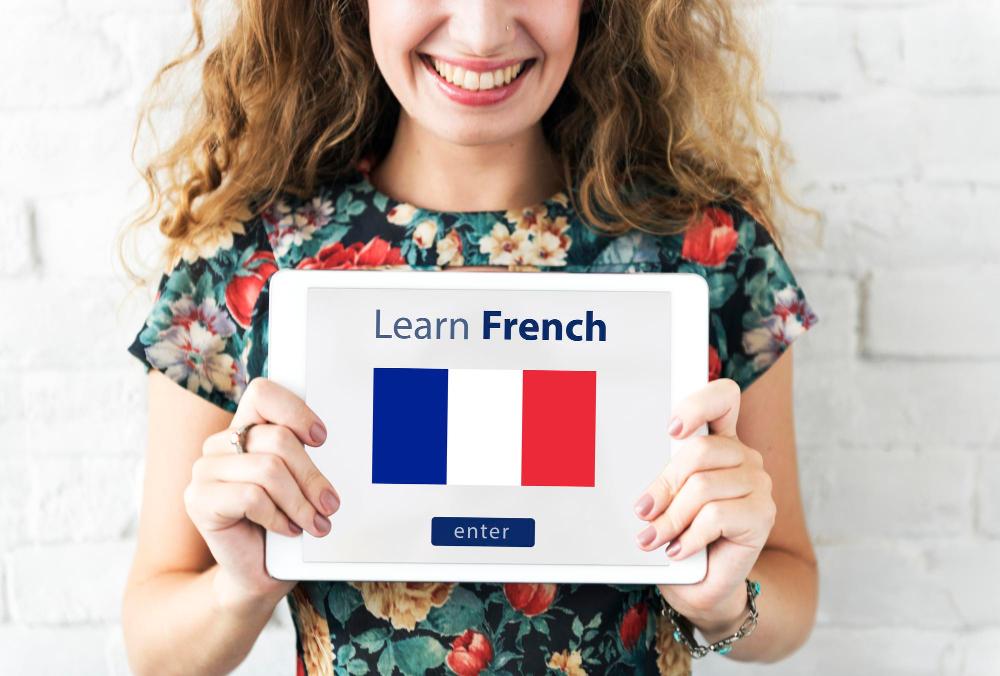
 Remember learning Spanish or French in high school, struggling to roll your Rs or remember verb conjugations? Now imagine if you'd started when you were seven years old, when learning a new language felt as natural as learning to ride a bike.
That's exactly what we offer at Wellspring Global Academy. Our elementary foreign language program introduces Spanish or French when children's brains are wired for language acquisition—when new sounds feel like play, not work, and cultural exploration sparks genuine curiosity rather than academic obligation.
This isn't about creating perfectly fluent second graders. It's about opening a door that will stay open for life, giving your child advantages that compound year after year, from elementary school through college admissions and into their careers.
Why Elementary School Is the Perfect Time
Your seven-year-old can hear subtle differences between sounds that you can't anymore. They'll practice pronunciation without the self-consciousness that makes teenagers cringe. They absorb patterns intuitively instead of memorizing grammar rules. And most importantly, they think learning a new language is fun.
The research backs up what parents of bilingual children already know: starting young works. Elementary-aged learners develop near-native pronunciation that's nearly impossible to achieve later. They pick up grammatical structures without drilling worksheets. They make mistakes freely, which paradoxically helps them learn faster than cautious older students.
But beyond the linguistic benefits, early language learning actually makes kids smarter in other subjects. Studies consistently show that bilingual children demonstrate better problem-solving skills, stronger memory, and enhanced creativity. Learning a second language doesn't take away from math or reading—it strengthens the brain pathways that support all learning.
Plus, understanding another language opens your child's eyes to the simple fact that there are different ways to see the world. That eight-year-old learning Spanish isn't just memorizing colors and numbers—she's discovering that millions of people organize their thoughts differently than she does. That's the beginning of true cultural awareness.
How We Actually Teach Language to Young Children
Walk into one of our virtual Spanish classes for first graders, and you won't see kids hunched over vocabulary lists. You'll see them singing about animals, playing Simon Says in Spanish, and giggling as they try to make unfamiliar sounds.
We've designed our program around how children naturally acquire language—the same way they learned English. Through games, songs, and stories. Through repetition that feels like play. Through making mistakes without even realizing they're mistakes.
Our teachers use the target language as much as possible during lessons, but they support understanding with pictures, gestures, and demonstrations. A kindergartener learning French might not understand every word the teacher says, but she understands the meaning—and that's how language acquisition actually works.
The focus is always on communication, not perfection. Can your child greet someone? Ask for something they need? Express a simple preference? Those real-world skills matter infinitely more than memorizing lists of words they'll never use.
What This Looks Like at Different Ages
Kindergarten and first grade starts gentle—just 15-20 minutes, two or three times a week. Lots of songs, lots of movement, lots of repetition around topics kids already know: colors, numbers, family, animals. At this age, it's almost entirely listening and speaking. Reading and writing can wait.
By second and third grade, lessons extend to 20-25 minutes three times weekly. Vocabulary expands, simple sentence patterns emerge, and we introduce basic reading in the target language. Students have simple conversations and explore culture through stories and celebrations.
Fourth and fifth graders can handle 30-minute sessions three or four times weekly. Grammatical structures become more complex. Reading and writing skills develop. Students work on projects that dive into cultural topics they're genuinely interested in—not because they have to, but because learning about Day of the Dead or French holiday traditions is actually interesting.
Spanish or French: Which Should Your Child Learn?
We offer both Spanish and French because both open different doors.
Spanish is practical—over 40 million people speak it in the United States, and it's the second-most spoken language globally. For career opportunities and daily life, Spanish is an obvious choice. We focus on Latin American and Spanish cultures, teaching vocabulary your child will actually use.
French offers different advantages. It's an official language in 29 countries across five continents, critical in international diplomacy, and serves as a gateway to other Romance languages. Plus, there's something undeniably appealing about French culture, art, and cuisine.
Either way, elementary language study begins a journey. Students who continue through middle school and high school can reach genuine proficiency or even fluency. Those who take AP language courses in high school have massive advantages in college admissions.
What If You Don't Speak the Language?
This is the number one question parents ask: "How can I help my child learn Spanish if I don't speak Spanish?"
Here's the good news: you don't need to. Our teachers provide all the instruction. Your role isn't teaching—it's cheerleading. Show enthusiasm for what your child is learning. Find a children's show in Spanish on Netflix. Make it fun to practice counting in French. That's honestly all you need to do.
Many parents actually enjoy learning alongside their children. There's something wonderful about discovering a language together, making the same silly mistakes, celebrating the same small victories. You might find yourself picking up more than you expect.
We provide resources to help: lists of children's books in the target language, recommendations for age-appropriate shows and videos, simple games and activities you can do together. But remember—your child's teacher is the expert. You're just the supportive audience.
The Online Advantage for Language Learning
You might worry that learning a language online can't match in-person instruction. Actually, online language learning offers some unique advantages.
Your child gets access to native speakers regardless of where you live. They hear diverse accents and regional variations through video and audio resources. Interactive software provides immediate feedback in ways that aren't possible in traditional classrooms. And here's the big one: students can review content multiple times until they truly understand.
Our teachers are either native speakers or have near-native proficiency. They bring authentic cultural perspectives—not textbook descriptions of culture, but real experiences from French or Spanish-speaking countries. That authenticity matters.
Live sessions keep language learning social and interactive. Students practice conversations with classmates, play games together, sing together, work on projects together. Language is fundamentally about communication, and our virtual classroom maintains that essential social component.
Beyond the Classroom
Language learning extends beyond our twice-weekly or thrice-weekly lessons. We integrate language across subjects—counting in Spanish during math, learning about geography of French-speaking countries, creating art inspired by target cultures.
Students explore daily life in target language countries, traditional celebrations and holidays, children's literature and folktales, music and dance traditions, and even food culture. This isn't dry cultural studies—it's discovering that kids in Mexico have recess just like they do, learning that French kids eat different things for breakfast, understanding that holidays they've never heard of are incredibly important to millions of people.
For students who want more, we offer optional language clubs, virtual pen pal programs with other Wellspring students, cultural celebration events, and opportunities to share projects with the broader school community. Language learning can be as engaging as your child wants to make it.
What Parents Should Know About Progress
Elementary language classes won't make your child fluent. Let's be honest about that upfront. True fluency requires years of sustained study and extensive exposure to authentic language use.
What elementary language does provide is something more valuable: the foundation that makes fluency achievable later. Your child develops pronunciation that would be nearly impossible to achieve starting in high school. They build intuitive understanding of grammatical structures. They develop confidence that learning languages is something they can do. They discover that other cultures are interesting, not foreign or scary.
Think of elementary language study as planting a seed. With continued watering through middle school world language courses and high school advanced study, that seed can grow into genuine bilingualism. Without elementary foundations, high school language study is significantly harder and less likely to produce advanced proficiency.
We assess progress appropriately for young learners—through observation during activities, participation in games and conversations, and portfolios showing growth over time. We focus on communication ability, not perfection. We celebrate risk-taking and effort, not just correct answers.
Special Situations
If your child has learning differences: Language learning can actually benefit students with dyslexia or other learning challenges, especially when the focus is on oral communication rather than written perfection in early stages. We provide multi-sensory approaches, visual supports, and flexible pacing. Your Educational Concierge coordinates with learning support plans.
If your child is exceptionally gifted with languages: We offer enrichment through additional resources, accelerated pacing, more complex cultural projects, and connections with advanced learning opportunities.
If your child already has some language exposure: Heritage speakers or students with prior exposure receive flexible placement at appropriate challenge levels. We celebrate and validate home language and culture while building academic language skills.
The Long View
In our increasingly interconnected world, multilingual skills provide advantages that extend far beyond high school. College admissions offices value students who've demonstrated commitment to language study and cultural awareness. Employers increasingly seek candidates with language abilities. International opportunities—from study abroad to global careers—require language skills.
But perhaps most importantly, understanding another language fundamentally changes how your child sees the world. They understand viscerally that their way of thinking isn't the only way. They develop empathy for people navigating life in a language that isn't their first. They appreciate cultural differences as enriching rather than threatening.
That's the real gift of early language learning—not just the ability to order dinner in Spanish or read a French menu, but the understanding that there are multiple valid ways to organize human experience and express human thought.
Ready to Begin?
Elementary school represents a precious window for language learning—when young minds absorb new sounds, structures, and patterns with remarkable ease. At Wellspring Global Academy, we make high-quality foreign language education accessible to elementary students regardless of location.
Explore our complete elementary program or schedule a consultation to discuss how language learning fits into your child's education. Connect with our Educational Concierge team to learn more about how we support young language learners.
Give your child the gift of bilingualism—starting with a strong elementary foundation.