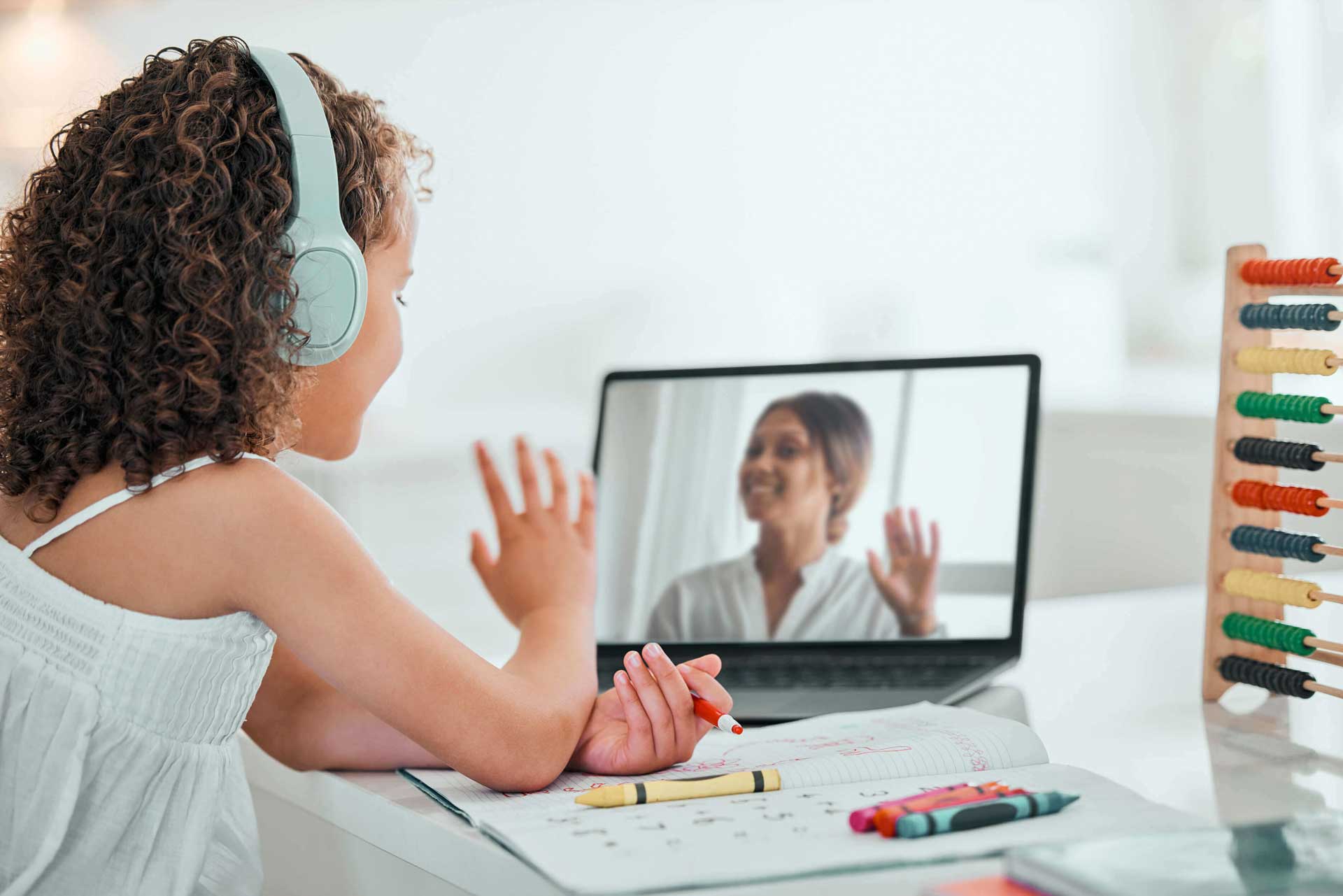
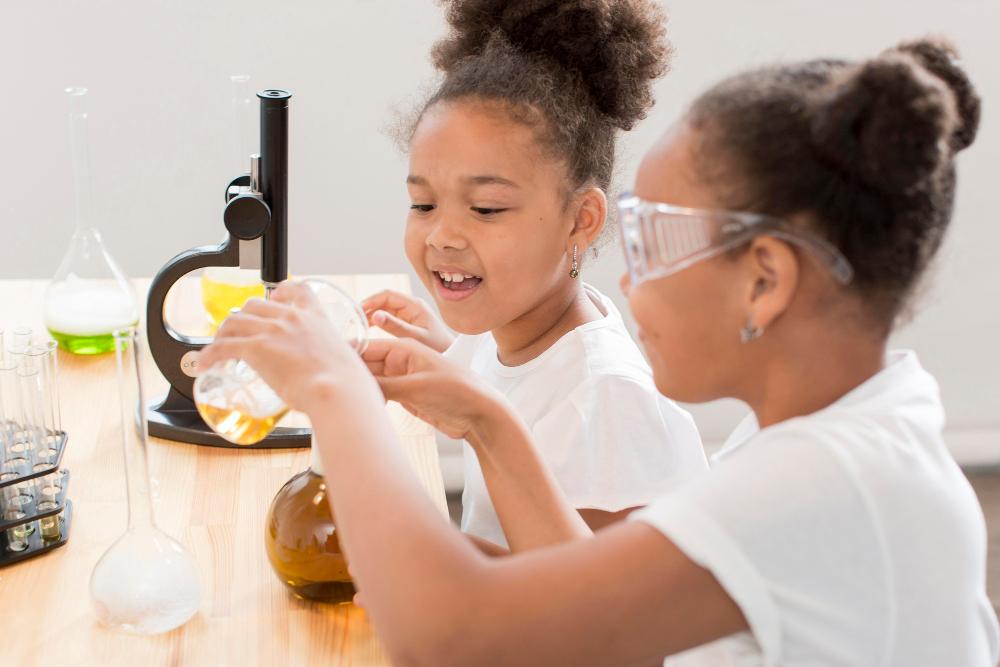
 At Wellspring Global Academy, we believe that meaningful science education requires active discovery, hands-on experimentation, and real-world exploration—even in a virtual learning environment. Our innovative approach to elementary science bridges the digital-physical divide, ensuring young scientists develop crucial scientific skills while experiencing the wonder and excitement of discovery.
Reimagining Elementary Science Education for the Online World
Through a thoughtful combination of carefully designed experiment kits, household materials, interactive digital platforms, and expert instruction, we've created a science program that engages young minds, fosters scientific thinking, and builds the foundation for lifelong STEM exploration.
Our Elementary Science Curriculum Approach
Standards-Aligned Excellence
Our elementary science curriculum is fully aligned with rigorous academic standards, including the Texas Essential Knowledge and Skills (TEKS). This alignment ensures that students receive comprehensive instruction in all key scientific concepts while allowing for the flexibility and personalization that online learning makes possible.
Inquiry-Based Methodology
Rather than simply presenting scientific facts, our curriculum engages students in the process of scientific discovery. Students learn to:
- Ask meaningful questions about the natural world
- Develop and test hypotheses
- Collect and analyze data
- Draw evidence-based conclusions
- Communicate scientific findings
This approach develops critical thinking skills that extend far beyond science class.
Grade-Level Progression
Our curriculum builds scientific understanding progressively across grade levels:
Kindergarten-1st Grade: Foundational observation skills, basic scientific tools, and exploring properties of everyday materials
2nd-3rd Grade: Scientific investigation methods, earth systems, life cycles, and simple physical science concepts
4th-5th Grade: More complex experimental design, in-depth study of ecosystems, energy transformations, and introduction to earth and space science
Cross-Disciplinary Connections
Science learning at Wellspring doesn't exist in isolation. Our curriculum intentionally connects scientific concepts with other subject areas:
- Mathematics: Data collection, measurement, and analysis
- Language Arts: Scientific vocabulary, procedural writing, and research skills
- Social Studies: Human interaction with environments and the history of scientific discovery
- Art: Scientific illustration, model building, and creative project design
These connections help students see science as an integrated part of understanding our world.
Hands-on Discovery at Home
Science Exploration Kits
For key experiments requiring specific materials, Wellspring provides pre-packaged science kits shipped directly to students' homes. These carefully curated materials ensure every student can participate fully in essential hands-on learning experiences.
Household Materials Experiments
Many of our experiments utilize common household items, making science accessible and demonstrating that scientific discovery doesn't require specialized equipment. Detailed guides help families gather appropriate materials and understand how to facilitate experiments safely.
Safety Protocols
Student safety is paramount in our program. All experiments include clear safety guidelines, appropriate adult supervision recommendations, and alternative approaches when needed. Our science educators review safety procedures during live sessions, ensuring all students understand proper precautions.
Parent Partnership
Parents play a valuable role in our science program, particularly with younger students. We provide clear guidance on:
- How to support without over-directing
- Questions that prompt scientific thinking
- Observation strategies that enhance learning
- Appropriate ways to respond to unexpected experimental results
This partnership approach ensures students receive the support they need while developing independence as scientists.
Virtual Labs and Interactive Simulations
Digital Exploration Platforms
Our program incorporates state-of-the-art digital platforms that allow students to:
- Observe phenomena difficult to recreate at home
- Manipulate variables in complex systems
- Visualize microscopic processes
- Explore environments from rainforests to ocean depths
- Conduct virtual dissections and investigations
These digital tools extend learning beyond what would be possible in many traditional classrooms.
Virtual Field Trips
Students regularly embark on virtual field trips to scientific institutions, natural environments, and research facilities. These experiences include:
- Live tours guided by scientific experts
- Interactive Q&A sessions with researchers
- Behind-the-scenes access to museums and laboratories
- Exploration of ecosystems around the world
Interactive Modeling
Complex scientific concepts come alive through interactive modeling that allows students to:
- Manipulate variables and observe outcomes
- Test hypotheses in controlled virtual environments
- Visualize abstract concepts
- Repeat experiments to confirm results
These tools make complex scientific principles accessible to young learners.
Live Instruction and Collaboration
Expert Science Teachers
Our elementary science instructors are experienced educators with:
- Strong science backgrounds and specialized elementary education training
- Expertise in creating engaging virtual learning experiences
- Skills in facilitating scientific thinking and questioning
- Ability to adapt instruction to diverse learning styles
This expertise ensures high-quality science instruction for every student.
Collaborative Scientific Inquiry
Science at Wellspring is a social experience. Through carefully structured collaborative activities, students:
- Share observations and questions
- Design experiments together
- Compare results across different locations
- Build on one another's ideas
- Develop communication and teamwork skills
These collaborative experiences prepare students for the increasingly team-based nature of scientific work.
Small Group Investigation Sessions
Beyond whole-class instruction, students participate in small group sessions that allow for:
- More individualized guidance
- Deeper exploration of specific interests
- Peer-to-peer learning
- Additional practice with challenging concepts
These smaller settings help ensure every student receives the support they need to thrive.
The Educational Concierge Advantage in Science Learning
Wellspring's unique Educational Concierge service provides invaluable support for science education:
Personalized Learning Coordination
Your dedicated Educational Concierge works with science instructors to:
- Identify your child's specific scientific interests and strengths
- Address any challenges with hands-on components
- Adjust pacing or approach when needed
- Provide additional resources for areas of particular interest
This personalized coordination ensures science learning matches your child's unique needs.
Family Support and Resource Connection
Educational Concierges help families navigate the science curriculum by:
- Providing advance notice about materials needed for upcoming experiments
- Connecting families with additional resources based on student interests
- Offering guidance for supporting hands-on learning at home
- Answering questions about curriculum progression and standards
This support helps families confidently facilitate science learning.
Connecting Classroom to Real World
Your Educational Concierge helps extend science learning beyond formal lessons by:
- Suggesting local science opportunities that complement the curriculum
- Providing resources for family science activities
- Connecting students with virtual science clubs and competitions
- Identifying science-related books and media that match student interests
These connections help make science a living subject rather than just a school subject.
Real-World Science Connection
Local Environment Exploration
Our curriculum includes guided activities that connect students to their local environments through:
- Backyard biodiversity surveys
- Weather observation and data collection
- Local geology exploration
- Seasonal change documentation
These activities help students see science happening all around them.
Outdoor Components
Regular outdoor learning components are integrated throughout the curriculum, encouraging students to:
- Collect natural specimens safely and ethically
- Observe natural processes firsthand
- Document environmental changes
- Connect digital learning with physical experiences
This balanced approach ensures students develop both technological and naturalist skills.
Community Science Projects
Students participate in authentic scientific research through community science initiatives where they:
- Collect and submit real data to scientific databases
- Contribute to actual research projects
- Connect with broader scientific communities
- See how individual observations combine to reveal patterns
Projects include monarch butterfly migration tracking, bird count participation, and weather data collection.
Scientist Connections
Students regularly connect with working scientists through:
- Virtual classroom visits
- Interviews with experts in various fields
- Q&A sessions about scientific careers
- Behind-the-scenes tours of laboratories and research facilities
These interactions help students envision themselves as future scientists and understand the human dimension of scientific work.
Assessing Scientific Growth
Project-Based Assessment
Student understanding is primarily assessed through authentic projects that demonstrate:
- Application of scientific concepts
- Mastery of scientific practices
- Communication of scientific ideas
- Creative problem-solving
This approach provides a more meaningful measure of scientific understanding than traditional testing alone.
Digital Science Portfolios
Students maintain digital portfolios of their scientific work, including:
- Experiment documentation and results
- Scientific drawings and models
- Video demonstrations of procedures
- Written reflections on learning
These portfolios showcase growth over time and develop important documentation skills.
Virtual Science Showcases
Regular opportunities to present scientific work provide:
- Authentic audiences for student projects
- Development of science communication skills
- Celebration of scientific achievements
- Cross-grade learning opportunities
These showcases build confidence and reinforce the collaborative nature of science.
Science Exploration Success Stories
Our elementary science program has fostered remarkable scientific growth across grade levels:
Kindergarten Weather Watchers: Our youngest scientists have created sophisticated weather observation stations at home, collecting and comparing data across diverse geographic locations to identify patterns and relationships.
3rd Grade Ecosystem Investigators: Students conducted comparative biodiversity studies of their local environments, documenting findings through scientific drawing and digital photography, and collaboratively creating a cross-continental ecosystem map.
5th Grade Energy Innovators: Upper elementary students designed and tested solar ovens using household materials, collecting performance data and collaboratively refining designs through an engineering design process.
Resources for Families
Parent Guide to Supporting Science Exploration
All families receive our comprehensive guide to supporting science learning, including:
- Tips for creating a home science exploration space
- Strategies for asking thought-provoking questions
- Guidance on supporting experimental failures as learning opportunities
- Ideas for extending curriculum connections
This resource helps parents confidently support their young scientists.
Supplemental Science Activities
For students eager for additional exploration, we provide optional extension activities including:
- Additional experiments using household materials
- Virtual science museum tours
- Recommended science reading by grade level
- Family-friendly citizen science projects
These resources allow for deeper exploration based on student interest and readiness.
Local Science Connections
Your Educational Concierge helps identify local resources that complement our curriculum:
- Natural areas for field explorations
- Science museums and nature centers
- Community science events
- Local expert resources
These connections help students see science in their communities.
Frequently Asked Questions
What supplies will we need to have on hand for science activities?
Most experiments use common household items (measuring cups, simple containers, etc.), while specialized materials are provided in science kits shipped to your home. Your Educational Concierge will provide advance notice of upcoming material needs, and all required materials are clearly listed in the curriculum.
How much parent supervision is needed for science activities?
Supervision requirements vary by grade level and activity. Kindergarten and 1st-grade experiments generally require direct adult participation, while upper elementary students often work more independently with adult oversight for safety. Specific supervision guidelines are included with each experiment.
How do online science activities compare to in-person labs?
Our science program combines the best of both worlds—physical experiments that students conduct at home and sophisticated digital simulations that may surpass what's available in many traditional classrooms. This hybrid approach often allows for more individualized exploration than is possible in conventional settings.
Can my child collaborate with others on science projects?
Yes! Our curriculum includes both synchronous collaborative activities during live sessions and opportunities for ongoing project collaboration through our secure digital platform. Your Educational Concierge can help facilitate connections with peers who share similar scientific interests.
How are science activities assessed in an online environment?
Assessment includes a combination of project submissions, digital portfolio reviews, live demonstrations during small group sessions, and completion of digital lab reports. This multi-faceted approach provides a comprehensive picture of student understanding and skills.
Get Started with Elementary Science at Wellspring
Ready to see how your child can thrive as a scientist in our virtual learning environment? Wellspring Global Academy is an approved educational provider for Education Savings Account (ESA) programs in several states, and growing. Our ESA specialists can guide eligible families through utilizing these funds for enrollment.
Experience a Sample Science Lesson
Join one of our upcoming virtual open houses.
Connect with an Educational Concierge
Schedule a personalized consultation to discuss how our science program can be tailored to your child's interests and needs: Request a Consultation
Explore Enrollment Options
Learn more about our enrollment process and how to apply: Enrollment Information
At Wellspring Global Academy, we're reimagining what elementary science education can be in a virtual environment—creating young scientists who observe closely, think critically, and approach the world with curiosity and wonder.