
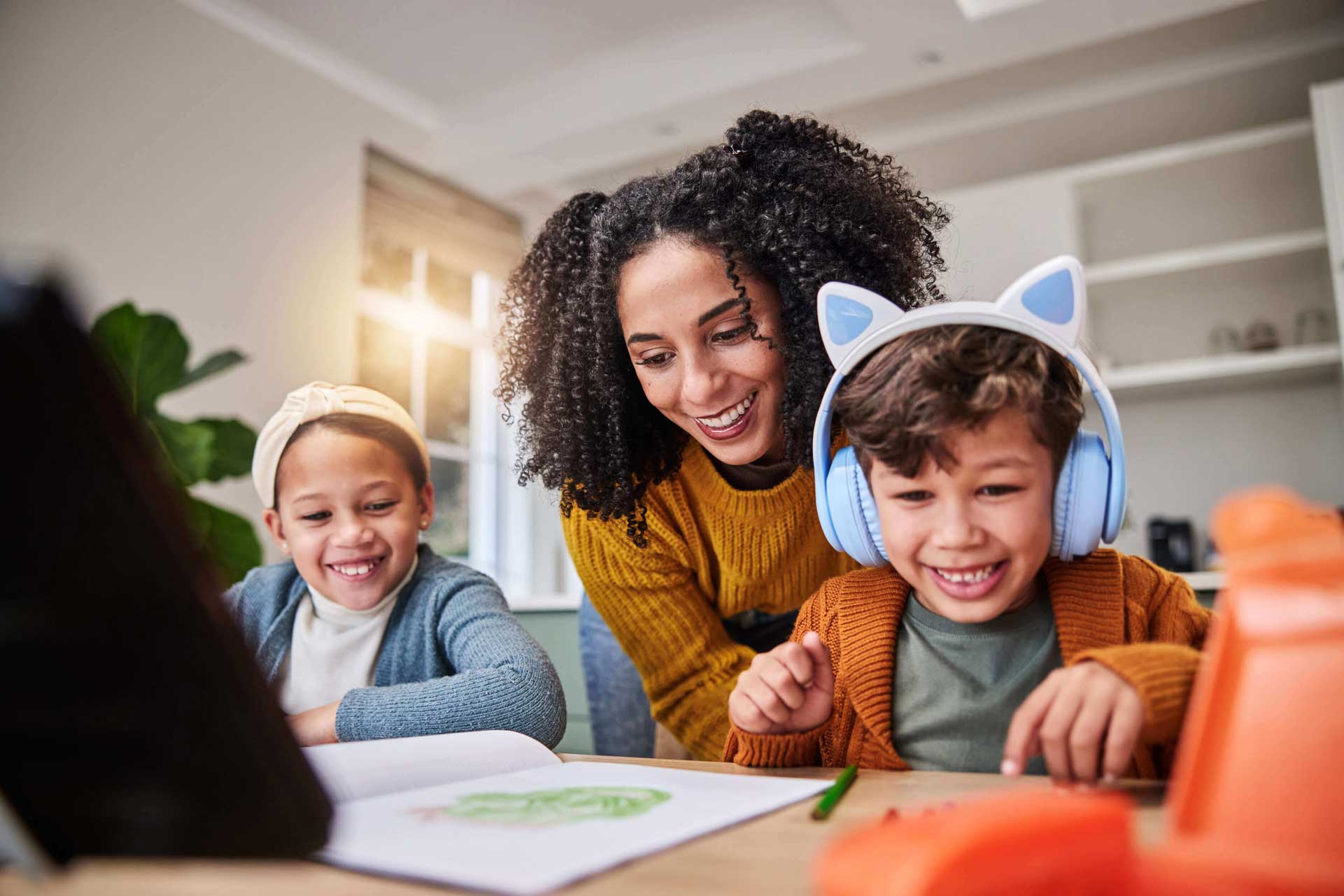
 Your daughter stayed up until midnight finishing a project. Your son skipped lunch to study for a test. Everyone's stressed, exhausted, and starting to resent school. Sound familiar?
Traditional schooling often forces families into impossible choices: academic success or adequate sleep. Rigorous education or time for physical activity. Good grades or family dinner together. It shouldn't be this way, and at Wellspring Global Academy, it doesn't have to be.
We believe that healthy, well-rested, physically active children learn better than stressed, sleep-deprived, sedentary ones. That's not just philosophy—it's neuroscience. Our online model gives families the flexibility to prioritize wellness without sacrificing educational excellence.
The Problem with Traditional School Schedules
Let's talk about a typical traditional school day. Wake up at 6:00 AM (before most teenagers' natural sleep cycles are ready). Sit relatively still for seven hours with minimal movement. Rush through lunch in fifteen minutes. Come home exhausted and face two to three hours of homework. Finally get to bed around 11:00 PM, only to repeat the cycle.
This schedule violates nearly everything we know about how children learn and develop. Adolescents need 8-10 hours of sleep, but most get 6-7. Children need significant physical activity, but they sit for most of their waking hours. Families need time together, but between school, homework, and extracurriculars, dinner together becomes rare.
The result? Childhood anxiety rates have skyrocketed. Depression among teens has doubled in the past decade. Physical fitness levels have declined. And paradoxically, despite spending more hours on education, learning outcomes haven't improved proportionally.
Something has to change.
How Online Learning Enables Wellness
Wellspring's flexible online model fundamentally reimagines the relationship between education and daily life. Instead of fitting life around rigid school schedules, families design schedules that support both rigorous learning and genuine wellness.
Sleep: The Foundation of Learning
Neuroscience is clear: sleep isn't a luxury—it's when learning actually happens. The brain consolidates information during sleep, particularly during REM cycles. A well-rested student learns more in four hours than an exhausted student learns in six.
Our asynchronous model means your teenager doesn't have to be alert and learning at 7:30 AM if that's when their brain is still in sleep mode. Many of our middle and high school students do their most challenging academic work between 9:00 AM and noon, after getting the sleep adolescent brains genuinely need.
Elementary students benefit too. Instead of fighting to get a tired six-year-old dressed and out the door by 7:00 AM, families can structure morning routines that feel calm rather than frantic. Learning happens when everyone's actually ready to learn.
This doesn't mean students sleep until noon and stay up all night. It means families can honor natural sleep patterns while maintaining consistent bedtimes and wake times that actually work for their children's biology.
Physical Activity: Moving to Learn Better
Research consistently shows that physical activity enhances cognitive function. Exercise increases blood flow to the brain, promotes neural growth, and improves focus and memory. Yet traditional schools provide minimal opportunities for movement—maybe PE twice a week and recess that's often eliminated for older students.
Online learning transforms this equation. Many Wellspring families structure their days to include:
Morning movement before learning: A bike ride, yoga session, or neighborhood walk that gets blood flowing before academic work begins
Movement breaks between subjects: Quick dance parties, jumping jacks, or outdoor play that refreshes focus rather than fighting through fatigue
Afternoon physical activities: Sports, martial arts, swimming, or simply playing outside—all possible because school doesn't consume every daylight hour
Family walks or activities: Time together that's active rather than screen-based
One of our eighth-grade students runs cross country competitively. In traditional school, she'd come home exhausted at 3:00 PM, immediately head to practice, return at 6:00 PM, and then face three hours of homework. With Wellspring's flexibility, she completes morning coursework, trains mid-day when she has optimal energy, and finishes remaining assignments in the evening without sacrificing sleep.
Nutrition: Fueling Learning Properly
Ever watched a child try to focus after eating cafeteria pizza and chocolate milk? Blood sugar spikes, then crashes. Focus disappears. Learning suffers.
At home, families control nutrition. Students can eat breakfast when they're actually hungry, not just grab a granola bar because there's no time. Lunch can be real food—not whatever fits in a lunchbox or passes for nutrition in a cafeteria. Healthy snacks throughout the day maintain steady energy and focus.
Some Wellspring families involve their children in meal preparation as life skills learning. A middle schooler preparing lunch practices measurement, following directions, and time management. An elementary student making a snack develops independence and decision-making skills. These practical activities complement academic learning.
Mental Health: Reducing Unnecessary Stress
School anxiety has become epidemic. Children develop stomachaches before school. Teenagers have panic attacks about grades. Kids as young as eight report feeling constantly stressed.
Some academic challenge is healthy—it builds resilience and grit. But chronic stress from social pressures, performance anxiety, and overwhelming schedules causes genuine harm. It doesn't make kids tougher; it makes them sick.
Online learning reduces many sources of school anxiety:
Social pressures: Students don't navigate cafeteria politics or hallway dynamics. They can be themselves without constant social navigation.
Performance anxiety: Mistakes happen in the relative privacy of online environments, not in front of twenty-five classmates watching you stumble through a presentation.
Schedule overwhelm: Flexible pacing means students can slow down when needed without falling irretrievably behind or speed up when they're thriving.
Sensory overload: For students sensitive to noise, crowds, or fluorescent lighting, learning from home eliminates daily sensory assaults.
This doesn't mean online learning is stress-free—learning inherently involves some challenge and discomfort. But it eliminates the unnecessary stressors that contribute nothing to actual education.
Building Wellness Into Your Daily Structure
Families approach this differently based on their values, schedules, and children's needs. Here are patterns that work well:
The Early Bird Family
Some families thrive on early schedules. Wake at 7:00 AM, complete core academic work from 8:00 AM to 12:00 PM when everyone's fresh, spend afternoons on physical activities and projects, enjoy family dinner and relaxed evenings, consistent 9:00 PM bedtime for elementary students, 10:00 PM for middle schoolers.
The Flexible Family
Other families prefer varied schedules adapting to each day's needs and rhythms. Some days start earlier, others later, depending on sleep quality and morning energy. Intensive academic work happens during peak focus periods, which vary by child. Physical activity gets prioritized when weather is beautiful or energy needs releasing. Quiet evenings include reading, family time, and relaxation.
The Night Owl Family
For families with naturally late-sleeping teenagers, schedules can honor adolescent biology. High schoolers wake naturally around 9:00 AM, complete morning physical activity or chores, tackle academic work from 10:00 AM to 2:00 PM, pursue afternoon passions and interests, work on lighter assignments in early evening, maintain consistent sleep schedules that provide adequate rest.
The point isn't finding the "right" schedule—it's finding what enables your family to prioritize wellness while maintaining educational rigor.
Wellness Beyond Physical Health
True wellness encompasses more than just sleep, nutrition, and exercise. It includes emotional wellbeing, family connection, personal growth, and joy.
Family Connection
Traditional school schedules steal family time. Between school hours, homework, and extracurriculars, families are lucky to share rushed dinners. Weekends become catch-up time for everything that couldn't happen during the week.
Wellspring families consistently report that online learning restored family connection. They eat lunch together. They take afternoon walks. They actually talk during dinner because everyone isn't exhausted. These moments matter profoundly for child development and family wellbeing.
Personal Growth and Passion Projects
When school doesn't consume every hour, children have time to become interesting people. They learn instruments. They build things. They develop genuine expertise in topics they care about. They get bored and figure out what to do about it—developing creativity and initiative that no curriculum can teach.
One of our high school students is a competitive equestrian who spends significant time at her barn. Another is teaching himself coding and building apps. A middle schooler volunteers at an animal shelter every week. An elementary student is learning woodworking with his grandfather.
These aren't extracurriculars squeezed into exhausted evenings—they're integrated parts of rich, full lives that include rigorous academics.
Rest and Downtime
Children need unstructured time. Time to daydream, play, create, or simply do nothing. Traditional schedules eliminate this almost entirely, packing every hour with structured activity or screen-based entertainment because everyone's too tired for anything else.
Wellspring families can protect downtime. After completing morning coursework, a child might spend an hour building with Legos, reading for pleasure, or playing in the yard. This isn't wasted time—it's essential for creativity, processing, and mental health.
What About Socialization?
This question always comes up: "Won't my child miss social interaction if they're home for school?"
The honest answer is that it depends how you approach it. Online learning reduces forced socialization—sitting next to random peers all day whether you like them or not. But it doesn't eliminate meaningful social connection.
Wellspring students connect through live class sessions, virtual clubs, collaborative projects, and online discussions. Many families coordinate with other Wellspring families in their area for in-person meetups. Students have time for community activities, sports teams, religious organizations, volunteer work, and neighborhood friendships.
The difference is that socialization becomes more intentional and less compulsory. Students develop friendships based on shared interests rather than geographic proximity alone. Many families find their children's social lives improve because they have time and energy for relationships, not just forced proximity.
Academic Rigor and Wellness Aren't Opposites
Some people assume that prioritizing wellness means lowering academic standards. This is completely wrong.
Well-rested, healthy, emotionally stable students learn better than stressed, exhausted, anxious ones. Period. The neuroscience is unambiguous. Adequate sleep enhances memory consolidation and problem-solving. Physical activity improves focus and cognitive function. Reduced anxiety allows the prefrontal cortex to actually engage with complex thinking.
At Wellspring, students complete a rigorous curriculum aligned with Texas TEKS standards. They engage in challenging project-based learning. They develop critical thinking skills and academic independence. The difference is that they do this while also getting enough sleep, eating properly, moving their bodies, and maintaining mental health.
This isn't choosing between wellness and education—it's recognizing that wellness enables better education.
Getting Started with Wellness-Centered Learning
If your family is drowning in traditional school's grind, online learning offers a life raft. You can structure days around your children's actual needs rather than fighting biology and wellbeing to fit arbitrary schedules.
This doesn't mean every day will be perfect. Kids will still have hard days. Academic challenges will still be challenging. But the baseline shifts from chronic stress and exhaustion to sustainable routines that support both learning and living.
Your Educational Concierge helps families develop schedules and rhythms that work for their unique situations. We don't impose one-size-fits-all solutions—we partner with families to find what enables their children to thrive both academically and personally.
Ready to explore how Wellspring Global Academy can support your family's wellness while maintaining educational excellence? Schedule a consultation to discuss how our flexible model might work for your family's specific needs and values.
Education and wellness aren't competing priorities—they're partners in helping your child thrive.