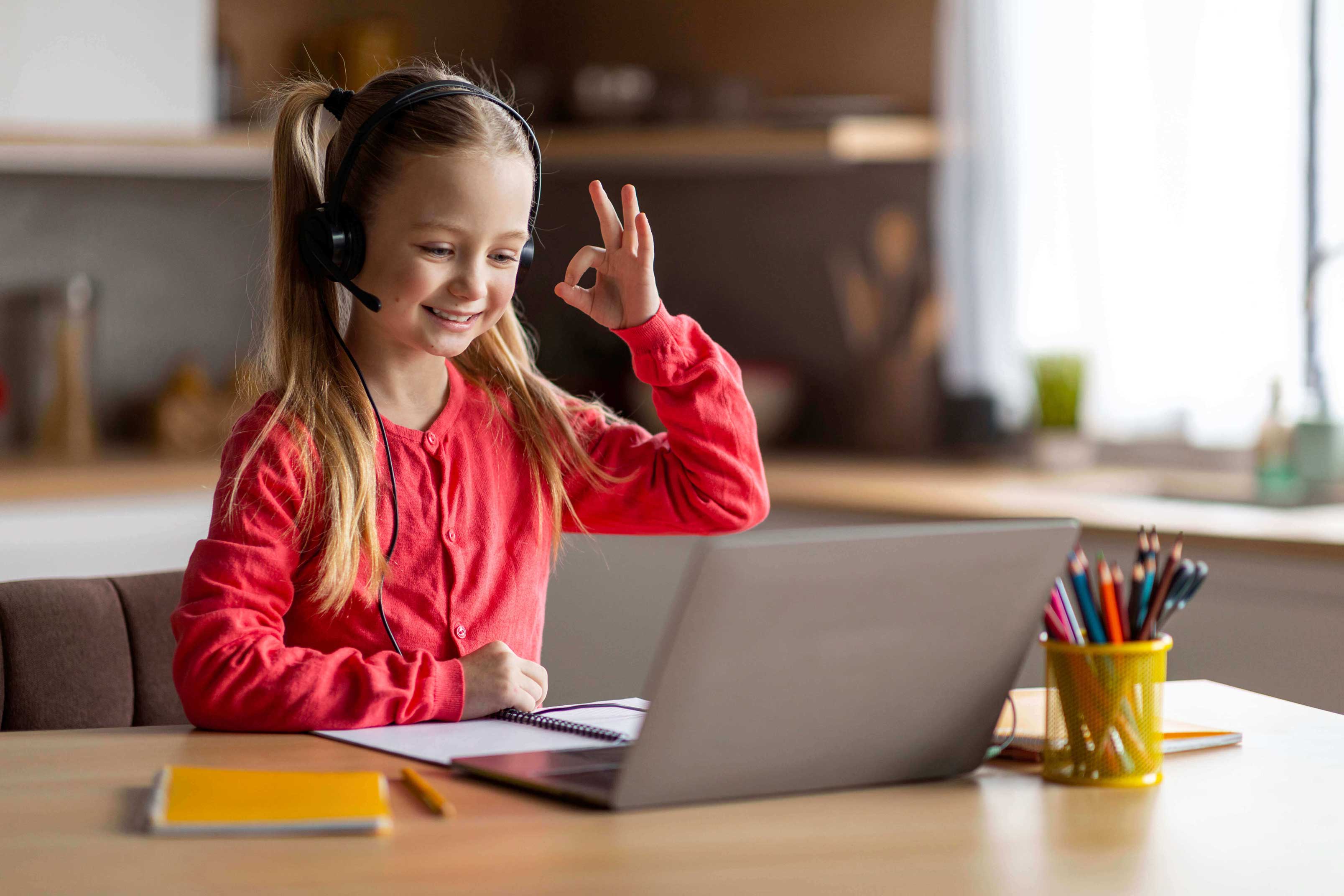
The early elementary years establish the foundation for a lifetime of learning. At Wellspring Global Academy, our K-2 program creates a joyful, supportive environment where young children develop essential skills, cultivate curiosity, and build confidence as learners.
Designed for Young Minds
Our K-2 program recognizes the unique developmental needs of early learners:
- Balanced Screen Time: Age-appropriate digital engagement combined with plenty of hands-on, offline learning activities
- Movement Integration: Physical activity incorporated throughout the learning day
- Playful Learning: Educational games and interactive activities that make learning fun
- Chunked Lessons: Short, focused learning segments that match young attention spans
- Visual and Audio Supports: Multisensory approaches that engage different learning styles
Core Academic Foundations
Our comprehensive curriculum builds strong foundational skills:
Literacy Development
- Systematic phonics instruction
- Reading comprehension strategies
- Developmentally appropriate writing skills
- Literature appreciation through daily read-alouds
- Digital and print reading materials
Mathematical Thinking
- Concrete understanding of number concepts
- Hands-on math explorations using household materials
- Problem-solving and mathematical reasoning
- Visual models for conceptual understanding
- Math games that reinforce skills while engaging young learners
Science Discovery
- Exploration of the natural world
- Simple, engaging experiments using everyday materials
- Observation and questioning skills
- Environmental awareness
- STEM connections through age-appropriate challenges
Social Studies Foundations
- Community awareness and social relationships
- Cultural appreciation and diversity
- Basic geography and spatial awareness
- Citizenship and character development
- Historical concepts through storytelling
Social-Emotional Development
Young learners thrive when emotional and social needs are prioritized alongside academics:
- Community Building: Regular class meetings and social activities that foster connections
- Emotional Literacy: Tools for identifying and expressing feelings appropriately
- Conflict Resolution: Age-appropriate strategies for solving problems with peers
- Growth Mindset: Encouraging persistence and resilience through challenges
- Character Development: Nurturing kindness, respect, and responsibility
The Learning Experience
A typical day in our K-2 program includes:
- Morning Meeting: A live, interactive session to build community and set the day's focus
- Core Instruction: Short, engaging lessons in literacy and math with teacher guidance
- Exploration Time: Hands-on learning activities that parents facilitate using simple materials
- Movement Breaks: Scheduled physical activity between learning segments
- Small Group Connections: Regular opportunities to work with peers in teacher-led groups
- Story Time: Daily read-alouds that build listening comprehension and vocabulary
- Project Work: Age-appropriate project-based learning with real-world connections
Parent Partnership
Parents play a vital role in our K-2 program:
- Learning Coach Guidance: Clear, detailed support for facilitating at-home activities
- Simple Materials List: Common household items and basic supplies for hands-on learning
- Flexible Scheduling Options: Ability to adapt the learning day to fit family needs
- Regular Teacher Communication: Weekly overviews and daily touchpoints
- Parent Community: Connections with other families for support and socialization
Educational Concierge Support
Our K-2 families receive dedicated support from an Educational Concierge who:
- Personalizes the Learning Approach: Adapts strategies to match your child's needs
- Provides Implementation Guidance: Helps you establish effective learning routines
- Coordinates Resources: Ensures you have everything needed for successful learning
- Facilitates Communication: Serves as your primary contact for questions and concerns
- Monitors Progress: Tracks development and suggests adjustments when needed
Technology Made Simple
Our user-friendly platform makes online learning accessible for young students:
- Child-Friendly Interface: Simple navigation with minimal reading required
- Single Sign-On: Easy access for young users with appropriate parent oversight
- Interactive Features: Engaging tools that support active learning
- Progress Tracking: Visual representations of accomplishments and growth
- Parent Dashboard: Clear overview of assignments, schedules, and resources
Bringing Learning to Life: Project-Based Exploration
Young children learn best through meaningful, hands-on experiences:
- Themed Projects: Integrated learning around topics that fascinate young minds
- Real-World Connections: Activities that apply skills to everyday situations
- Creative Expression: Multiple ways to demonstrate learning beyond traditional assessments
- Collaborative Opportunities: Group projects that build social skills alongside academic growth
- Community Sharing: Platforms for students to present their work to peers and family
Frequently Asked Questions
How much parent involvement is required for K-2 students?
Parents of K-2 students typically serve as learning coaches for 3-4 hours daily, providing supervision, encouragement, and support. Your Educational Concierge will help you find the right balance for your family and develop strategies to foster appropriate independence.
What materials will we need at home?
Most activities utilize common household items and basic supplies like paper, crayons, scissors, and counting objects. A detailed supply list is provided before the school year begins, and your Educational Concierge can help with alternatives if needed.
How do you keep young children engaged in online learning?
Our approach combines short, interactive live sessions with plenty of hands-on, offline activities. We incorporate movement, games, and multisensory experiences throughout the day to maintain engagement while respecting developmental needs.
How do you help young students build social connections?
Regular small group activities, community-building sessions, and virtual "playdates" help students form friendships. We also provide guidance for local socialization opportunities and family connections.
How do you assess progress for K-2 students?
We use developmentally appropriate assessment methods including observation, work samples, and simple skill checks. Our focus is on growth rather than grades, with regular updates provided to parents through portfolio reviews and conferences.
Begin Your Child's Learning Journey
Give your child the gift of a joyful, foundational educational experience that builds skills, confidence, and a love of learning. Want to learn more? Read our article, Online vs. Traditional School: Making the Right Choice for Your Child's Unique Needs.