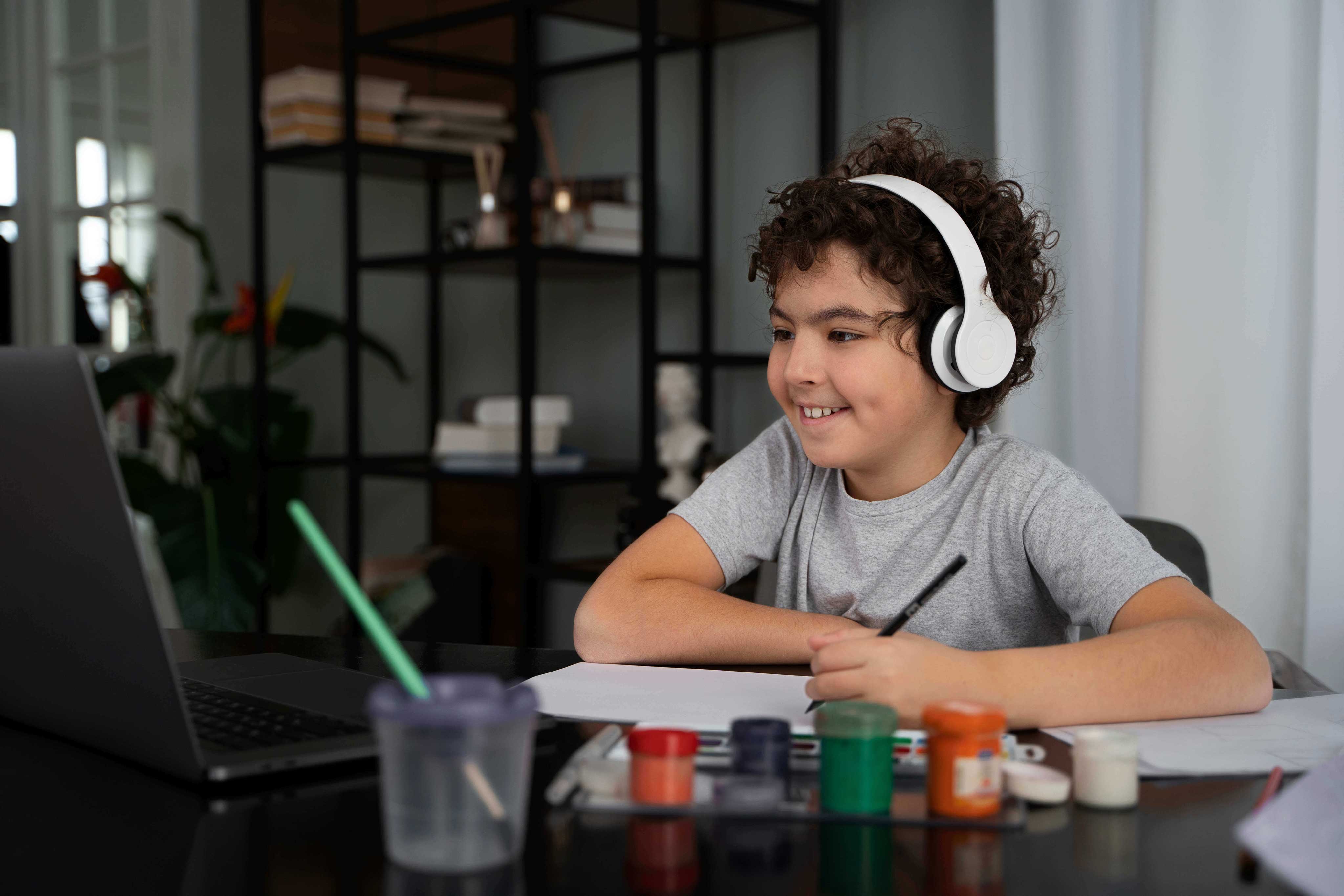
At Wellspring Global Academy, we believe that meaningful learning happens when students engage with real-world challenges, questions, and problems. That's why Project-Based Learning (PBL) forms the cornerstone of our educational approach, transforming traditional online education into a dynamic, engaging experience that develops not just academic knowledge, but the essential skills students need for future success.
Bringing Authentic, Hands-On Learning to the Virtual Classroom
Our innovative approach to online PBL combines the flexibility and personalization of virtual learning with the depth and authenticity of hands-on projects. Through carefully designed experiences that connect curriculum standards to real-world applications, our students develop critical thinking, collaboration, creativity, and communication skills while mastering academic content in meaningful contexts.
What is Project-Based Learning?
Project-Based Learning is an instructional approach where students gain knowledge and skills by working for an extended period to investigate and respond to an authentic, engaging, and complex question, problem, or challenge. Unlike traditional assignments that often focus on discrete skills or content in isolation, PBL integrates multiple subjects and skills in the context of meaningful work.
Core Principles of Effective PBL
Our approach to Project-Based Learning is guided by these essential elements:
Challenging Problem or Question
- Projects center around a meaningful problem to solve or question to answer
- The challenge is appropriately complex for student age and experience
- Questions connect to real-world issues when possible
- Problems are open-ended with multiple potential approaches
Sustained Inquiry
- Projects extend over time (days, weeks, or months)
- Students engage in a rigorous, extended process of asking questions and finding resources
- Investigation combines both teacher-guided and independent research
- Inquiry leads to deeper knowledge and solution development
Authenticity
- Projects address real-world issues or connect to students' concerns
- Tasks mirror those performed by professionals in the field
- Projects have impact or relevance beyond the classroom
- Work results in products or presentations valued in the real world
Student Voice and Choice
- Students make decisions about project direction and execution
- Choice increases with age and experience level
- Autonomy balanced with structure and guidance
- Personal interests and strengths influence project paths
Reflection
- Students and teachers reflect on learning, effectiveness of activities
- Assessment happens throughout the project, not just at the end
- Feedback loops drive revision and improvement
- Metacognition about both content and process
Critique and Revision
- Multiple drafts, iterations, and improvements
- Feedback from peers, teachers, and sometimes external experts
- Standards of quality made explicit through rubrics and examples
- Culture of thoughtful critique and growth mindset
Public Product
- Students create work that can be shared beyond the classroom
- Authentic audiences provide real-world context and motivation
- Presentations develop communication skills
- Products demonstrate learning and create legacy
Research-Backed Benefits
Extensive research supports the effectiveness of Project-Based Learning:
- Deeper conceptual understanding – Students retain content longer and understand it more thoroughly when learned through projects
- Improved engagement – Authentic tasks increase motivation and investment in learning
- Development of 21st-century skills – Critical thinking, collaboration, communication, and creativity flourish in PBL environments
- Higher achievement – Well-implemented PBL leads to better performance on both standardized tests and measures of deeper learning
- Increased equity – PBL narrows achievement gaps for many underserved student populations
- Better preparation for future learning – Students develop self-direction and learning strategies that transfer to new contexts
The Wellspring PBL Approach
At Wellspring Global Academy, we've thoughtfully adapted Project-Based Learning for the virtual environment, creating a framework that leverages the unique advantages of online learning while preserving the hands-on, authentic nature of true PBL.
1. Our Framework and Methodology
Our approach follows a consistent structure while allowing for customization:
Project Launch
- Engaging entry events that spark curiosity
- Introduction of driving question or challenge
- Establishment of project parameters and timeline
- Connection to standards and learning objectives
- Building background knowledge and context
Guided Inquiry and Research
- Structured investigation of key concepts
- Development of necessary content knowledge
- Teacher-led mini-lessons to build specific skills
- Resource curation and evaluation guidance
- Digital and physical research pathways
Ideation and Planning
- Brainstorming possible approaches and solutions
- Critique and refinement of initial ideas
- Creation of detailed project plans
- Task distribution for collaborative projects
- Resource gathering and preparation
Creation and Development
- Hands-on work with physical and/or digital components
- Regular check-ins and progress monitoring
- Peer collaboration and feedback sessions
- Expert consultation when appropriate
- Iteration based on ongoing assessment
Reflection and Revision
- Structured critique sessions
- Self-assessment against quality criteria
- Targeted revisions based on feedback
- Documentation of learning process
- Metacognitive reflection on growth
Presentation and Celebration
- Preparation of final products or presentations
- Sharing with authentic audiences
- Celebration of accomplishments
- Documentation for student portfolios
- Connection to future learning
2. Integration with Core Curriculum
Our PBL experiences are tightly aligned with academic standards:
- Projects designed to address multiple standards across subjects
- Key content embedded within project contexts
- Skill development interwoven with project milestones
- Assessment aligned with both standards and 21st-century skills
- Documentation that tracks standards mastery through projects
3. Grade-Level Appropriate Implementation
We adapt our PBL approach to match developmental stages:
Elementary (K-5)
- More scaffolded, shorter-term projects
- Significant teacher guidance and structured choice
- Emphasis on curiosity, discovery, and basic collaboration
- Simple, concrete challenges with tangible outcomes
- Family involvement in project support
Middle School (6-8)
- Increased project complexity and duration
- Expanded student voice and choice
- Growing emphasis on research and critical thinking
- Introduction of more abstract challenges
- Development of collaboration and communication skills
High School (9-12)
- Complex, often interdisciplinary projects
- Substantial student autonomy and direction
- Connections to career and college preparation
- Sophisticated products and presentations
- Potential for community impact and professional connections
4. Assessment and Feedback Systems
Our comprehensive assessment approach includes:
- Formative assessments throughout the project process
- Rubrics that clarify expectations and quality standards
- Portfolio documentation of both process and products
- Self and peer assessment to develop evaluative skills
- Performance assessments through presentations and demonstrations
- Reflection protocols that capture learning beyond the final product
Technology as an Enabler, Not a Barrier
One of the most common questions about online PBL is how students can engage in hands-on learning through a computer screen. At Wellspring, we view technology not as a limitation but as a powerful tool that can actually enhance the PBL experience in many ways.
1. Digital Tools that Facilitate Collaboration
Our platform supports teamwork across distances:
- Collaborative workspaces for real-time group work
- Digital kanban boards for project management
- Shared documents for co-creation and editing
- Video conferencing with breakout rooms for team meetings
- Digital annotation tools for feedback and revision
- Asynchronous collaboration options for scheduling flexibility
2. Virtual Presentation and Exhibition Platforms
Students share their work through multiple channels:
- Virtual exhibition spaces for showcasing projects
- Digital portfolio tools for documenting work
- Multimedia presentation platforms for dynamic sharing
- Video creation and editing tools for recorded presentations
- Live streaming options for real-time exhibitions
- Virtual reality spaces for immersive presentations
3. Documentation and Reflection Opportunities
Digital tools enhance the reflection process:
- Learning journals that capture the project journey
- Process documentation through photos, videos, and notes
- Reflection protocols guided by digital templates
- Audio and video reflection options beyond written formats
- Progress tracking tools that visualize growth
- Digital assessment dashboards that aggregate feedback
4. Global Connections and Resources
Online learning expands project possibilities:
- Expert access regardless of geographic location
- Virtual field trips to relevant sites worldwide
- Primary source access through digital archives
- Cross-school collaborations with diverse partners
- Real-time data collection from multiple locations
- Global audience possibilities for project sharing
Sample PBL Experiences Across Grade Levels
Our projects vary widely based on grade level, subject focus, and student interests. Here are examples that illustrate our approach at different ages:
Elementary Projects that Build Foundational Skills
Water Cycle Terrarium (Science/Engineering, Grade 3)
- Driving Question: How can we create a self-sustaining ecosystem that demonstrates the water cycle?
- Process: Students research the water cycle, design and build terrariums using household materials, observe and document changes, and create informational guides explaining the science for younger students.
- Products: Physical terrarium, observation journal, explanatory guide with diagrams
- Authentic Audience: Younger grade levels learning about the water cycle
Community Helper Podcast (Social Studies/ELA, Grade 1-2)
- Driving Question: How do different helpers make our community work?
- Process: Students identify community roles, prepare interview questions, conduct virtual interviews with community helpers, and create simple podcast episodes sharing what they learned.
- Products: Audio recordings, simple scripts, thank you notes
- Authentic Audience: Families, community helpers, classmates
Middle School Interdisciplinary Explorations
Sustainable City Design (Science/Social Studies/Math, Grade 7)
- Driving Question: How can we design a city neighborhood that meets human needs while minimizing environmental impact?
- Process: Students research sustainability principles, analyze existing cities, apply mathematical concepts to space planning, and develop comprehensive neighborhood designs with supporting data.
- Products: Scale models (physical or digital), zoning plans, environmental impact statements, presentation to urban planners
- Authentic Audience: Local urban planning department, sustainability experts
Digital Storytelling for Change (ELA/History/Technology, Grade 6)
- Driving Question: How can we use digital stories to illuminate an issue from history that still affects our world today?
- Process: Students research historical issues with contemporary relevance, analyze primary sources, develop narrative techniques, and create multimedia presentations that connect past to present.
- Products: Digital stories, research portfolios, action recommendations
- Authentic Audience: Historical society, community organizations, other students
High School Real-World Impact Projects
Public Health Campaign (Science/ELA/Technology, Grade 10-11)
- Driving Question: How can we effectively educate our community about an important public health issue?
- Process: Students research current public health challenges, analyze existing campaigns, collect and interpret health data, and develop multimedia campaigns based on principles of effective communication.
- Products: Public service announcements, informational materials, campaign strategy documents, implementation plan
- Authentic Audience: Local health department, school community, public health professionals
Market-Based Solution for Environmental Issue (Economics/Science/Math, Grade 11-12)
- Driving Question: How might we create an economically viable product or service that addresses a specific environmental problem?
- Process: Students identify environmental issues, conduct market research, develop prototypes, test effectiveness, calculate costs and pricing, and create business plans for sustainable solutions.
- Products: Product prototype or service model, business plan, environmental impact analysis, investor pitch
- Authentic Audience: Environmental organizations, business professionals, potential investors
Student Choice and Voice Throughout
Across all grade levels, we incorporate significant student input:
- Interest surveys identify topics of high engagement
- Project menus offer structured choices within parameters
- Role selection allows focus on different aspects based on strengths
- Execution decisions give students agency in how to complete tasks
- Presentation format options honor diverse communication preferences
- Reflection choices recognize different ways of processing learning
Developing Essential Skills Through PBL
Beyond academic content, our Project-Based Learning approach intentionally develops the transferable skills students need for future success.
Critical Thinking and Problem-Solving
Projects cultivate sophisticated thinking skills:
- Analysis of complex situations and information
- Evaluation of potential solutions against criteria
- Synthesis of ideas from multiple sources
- Systems thinking that recognizes interconnections
- Creative problem-solving when facing obstacles
- Decision-making based on evidence and reasoning
Collaboration and Communication
Students develop essential interpersonal abilities:
- Effective teamwork across digital platforms
- Role definition and fulfillment within groups
- Conflict resolution strategies for team challenges
- Clear communication of ideas and information
- Audience awareness in presentations and products
- Giving and receiving feedback constructively
Research and Information Literacy
Projects build sophisticated research capabilities:
- Question formulation that drives meaningful inquiry
- Source evaluation for reliability and relevance
- Information synthesis from diverse materials
- Digital literacy across various platforms
- Data interpretation and evidence assessment
- Attribution and citation of sources properly
Time Management and Project Planning
Students develop executive functioning skills:
- Project timeline development and milestone setting
- Task prioritization and resource allocation
- Progress monitoring and adjustment as needed
- Balancing quality and timeliness in deliverables
- Digital and physical organization of materials
- Meeting management for efficient collaboration
Self-Direction and Initiative
Projects foster growing autonomy:
- Goal setting and progress tracking
- Intrinsic motivation through meaningful work
- Perseverance through challenges and setbacks
- Self-assessment against quality standards
- Initiative in seeking resources and assistance
- Ownership of learning process and outcomes
Community and Expert Connections
While our learning takes place online, our PBL approach extends far beyond the virtual classroom to include rich connections with experts, organizations, and communities.
Virtual Guest Speakers and Mentors
We bring diverse perspectives into projects:
- Industry professionals providing real-world context
- Subject matter experts offering specialized knowledge
- Community leaders sharing local perspectives
- Alumni mentors guiding current students
- Parents and family members with relevant expertise
- Global partners offering international viewpoints
Industry and Organization Partnerships
We develop relationships that enhance project authenticity:
- Business partnerships for real-world problem contexts
- Nonprofit collaborations for service-learning projects
- Government agency connections for civic engagement
- University partnerships for research opportunities
- Arts organization relationships for creative projects
- Environmental group affiliations for sustainability work
Parent and Family Involvement
We engage families as valuable project resources:
- Expertise sharing based on professional backgrounds
- Material support for physical project components
- Authentic audience participation during presentations
- Community connection facilitation through networks
- Celebration participation to honor accomplishments
- Documentation assistance to capture process
Public Exhibitions and Presentations
We create meaningful sharing opportunities:
- Virtual exhibition events open to the public
- Digital showcases of student work
- Community presentations to relevant organizations
- Competitions and contests when appropriate
- Publication opportunities in various formats
- Media sharing through school and partner channels
Hands-On Learning at Home
One of the unique aspects of our online PBL approach is how we facilitate tangible, hands-on learning experiences despite the distance between teachers and students.
Materials and Supplies Approach
We ensure students have what they need:
- Common household materials incorporated into project design
- Supply lists provided well in advance of project start
- Alternative options for various materials
- Supply kits for specialized projects when necessary
- Budget-conscious approaches to minimize family expense
- Sustainability emphasis through reuse and recycling
Physical Project Components
We emphasize tangible creation across subject areas:
- Physical models and prototypes in science and engineering
- Artistic creations in various media
- Manipulatives and hands-on tools for mathematical concepts
- Physical experiments and demonstrations for scientific inquiry
- Tangible artifacts that document learning
- Environmental interactions through outdoor components
Balance of Digital and Tangible Experiences
We thoughtfully combine virtual and physical elements:
- Digital planning for physical execution
- Physical creation documented digitally
- Virtual collaboration around tangible products
- Digital research informing hands-on experimentation
- Physical data collection with digital analysis
- Tangible prototypes refined through digital feedback
Support for Families in Facilitating Projects
We partner with parents to enable successful implementation:
- Clear guidance on appropriate support levels
- Tutorial videos for unfamiliar techniques or tools
- Troubleshooting support for common challenges
- Safety guidelines for materials and activities
- Scheduling flexibility to accommodate family needs
- Regular communication about project progress
Teacher Role in Facilitating Virtual PBL
Our teachers serve as skilled facilitators who guide the PBL process while empowering students to take ownership of their learning.
Project Design and Adaptation for Online Delivery
Teachers thoughtfully craft PBL experiences:
- Backward design from standards and learning objectives
- Virtual adaptation of traditionally in-person activities
- Engagement planning to maintain motivation remotely
- Resource curation for student research
- Technology integration that enhances rather than complicates
- Accessibility considerations for diverse learner needs
Guidance and Coaching Throughout the Process
Teachers provide the right support at the right time:
- Just-in-time instruction when skills or knowledge are needed
- Strategic questioning that promotes deeper thinking
- Progress monitoring with appropriate interventions
- Balance of structure and autonomy based on student needs
- Customized scaffolding for various learning profiles
- Metacognitive prompting to develop reflection habits
Facilitating Group Work and Collaboration
Teachers help students work effectively together:
- Thoughtful grouping strategies based on project needs
- Collaboration skill instruction integrated into projects
- Digital teamwork tools introduction and support
- Conflict resolution guidance when challenges arise
- Accountability systems that promote equal participation
- Synchronous and asynchronous collaboration facilitation
Assessment and Meaningful Feedback
Teachers implement comprehensive assessment approaches:
- Formative checkpoints throughout the project process
- Individualized feedback on work-in-progress
- Peer critique facilitation and guidance
- Standards-based evaluation of final products
- Process documentation alongside product assessment
- Growth-focused reflection on learning and development
Frequently Asked Questions
How do you ensure students master required content through projects?
Our Project-Based Learning approach begins with careful backward design from academic standards. Teachers identify the key knowledge and skills students need to develop, then craft driving questions and project parameters that naturally lead to this learning. Throughout the project, teachers provide structured mini-lessons, guided practice, and just-in-time instruction to build necessary skills. Regular formative assessment checkpoints ensure students are mastering required content, with intervention provided when needed. Projects are designed to create multiple opportunities to demonstrate understanding of key concepts, often at a deeper level than traditional instruction allows.
How do students collaborate on projects in a virtual environment?
Collaboration happens through both synchronous and asynchronous channels. During live sessions, teachers use video conferencing with breakout rooms for team meetings, discussions, and collaborative work. Between sessions, students use shared digital workspaces, collaborative documents, project management tools, and communication platforms to continue their teamwork. We explicitly teach digital collaboration skills and establish clear team protocols. Teachers monitor group dynamics and provide support when needed. Many students find that virtual collaboration builds valuable skills for the increasingly digital workplace they will eventually enter.
What does parent involvement look like in online PBL?
Parent involvement varies by grade level and project type. For younger students, parents may need to provide supervision, help gather materials, or assist with certain technical aspects. As students mature, the parent role shifts toward support and encouragement while students take increasing responsibility. We provide clear guidance to parents about appropriate involvement levels, including tutorial videos, material lists with common household alternatives, and regular communication about project progress. Our Educational Concierge team also serves as a resource for parents navigating their supporting role in the PBL process.
How do you handle the physical materials needed for hands-on projects?
Projects are designed with material accessibility in mind, utilizing common household items whenever possible. For specialized projects, we provide supply lists well in advance and suggest readily available alternatives. When unique supplies are essential, we may send project kits to families or work with them to source materials locally. All projects include options to accommodate different resource availability. This approach not only ensures equity but also builds student problem-solving skills as they learn to work creatively with available materials—a valuable real-world capability.
How do you assess project work fairly and accurately?
Assessment begins with clear expectations communicated through detailed rubrics and exemplars. Throughout the project, we use a combination of formative assessments, teacher observations during live sessions, documentation of process through portfolios, peer and self-assessments, and evaluation of final products or presentations. Our assessment approach considers both individual contribution and team outcomes, balancing content mastery with skill development. Digital submission of work in progress allows teachers to provide targeted feedback and monitor authentic engagement, ensuring fair evaluation of each student's learning.
Can students with different learning needs succeed with PBL?
Absolutely. In fact, Project-Based Learning is particularly effective for diverse learners because it allows multiple entry points, offers various ways to engage with content, and provides options for demonstrating understanding. For students who need additional support, we offer scaffolded materials, modified project parameters, additional check-ins, and targeted skill development. For advanced learners, projects can easily extend to incorporate greater depth, complexity, or independence. The inherent flexibility of PBL allows us to personalize the experience while maintaining high expectations for all students.
How does online PBL prepare students for standardized tests?
While PBL approaches learning differently than traditional test preparation, research consistently shows that well-implemented Project-Based Learning leads to deeper understanding and better long-term retention of content—both of which contribute to strong test performance. Our projects are explicitly aligned with academic standards, ensuring students master required content. Throughout projects, teachers provide structured instruction on key concepts and skills, check for understanding, and address gaps. Additionally, the critical thinking, problem-solving, and analytical skills developed through PBL help students tackle unfamiliar questions and complex tasks on standardized assessments.
PBL in Action at Wellspring
Our Project-Based Learning approach is continuously evolving as we refine our practices and respond to student needs. Here's a glimpse of what's happening in our virtual classrooms:
Current and Upcoming Projects
Across grade levels, students are engaged in meaningful work:
- Elementary students creating digital field guides to local ecosystems
- Middle schoolers designing and testing water filtration systems
- High school students developing public history projects about their communities
- Cross-grade collaborations addressing sustainability challenges
- Global partnerships exploring cultural exchange through digital storytelling
Connection to Curriculum Standards
Our projects thoughtfully integrate academic requirements:
- Standards-aligned content embedded in authentic contexts
- Skills practice occurring naturally within project work
- Cross-curricular connections that deepen understanding
- Documentation systems that track standards mastery
- Assessment approaches that evaluate both content and skills
Exhibition and Celebration Opportunities
We create meaningful ways to share student work:
- Quarterly virtual exhibition events for the school community
- Digital portfolio showcases highlighting student growth
- Expert feedback sessions with industry professionals
- Family celebration events for project completion
- Community presentations to authentic audiences
- Publication opportunities through various platforms
Getting Started with Project-Based Learning
Transitioning to our PBL approach is an exciting journey for new students and families. We provide comprehensive support to ensure a successful experience from day one.
Introduction to PBL for New Students
We thoughtfully onboard students to our approach:
- Orientation sessions explaining PBL philosophy and practices
- Skill-building activities developing necessary capabilities
- Graduated project complexity as students build comfort
- Clear expectations about process and participation
- Technology training for collaboration and creation tools
- Early success opportunities building confidence and engagement
Support for Families Transitioning from Traditional Education
We help families adjust to their new role:
- Parent orientation to the PBL approach
- Clear guidelines about appropriate support levels
- Regular communication about project progress
- Resources and tutorials for unfamiliar aspects
- Access to Educational Concierge for questions and guidance
- Community building with experienced PBL families
At Wellspring Global Academy, we believe that authentic Project-Based Learning is not just compatible with online education—it's enhanced by it. Our approach combines the best of hands-on, experiential learning with the flexibility, personalization, and expanded possibilities of the virtual environment.
Through carefully designed projects that connect curriculum to real-world challenges and opportunities, our students develop not only deep academic understanding but also the essential skills they'll need for future success: critical thinking, collaboration, communication, and self-direction.
Ready to experience the power of Project-Based Learning in a flexible online environment? Schedule a Virtual Open House to see our approach in action, or contact our admissions team to learn more about how Wellspring Global Academy can transform your child's educational experience.